The Notwork
Co-architect · led the build team · sole maintainer since Oct 2025
The Notwork is the full-stack platform behind North Carolina's first state-backed esports and STEM league. Students learn through mastery pathways, play games, earn micro-credentials, and compete on rosters and leaderboards. The same platform runs the league: teachers verify students, staff manage content and seasons, and admins push updates all year. I co-architected it, led the team that built it and its 2025 rebuild, and have run it on my own since October 2025.
- Users
- ~24K
- Page views
- ~490K
- Peak DAU
- ~1K
- Tracked events
- ~1.5M
What it's built with





The problem
The league needed one platform that could both teach students and run the season: learning content, games, and competition for students, plus verification, rosters, communication, and content tools for teachers and staff.
What I built
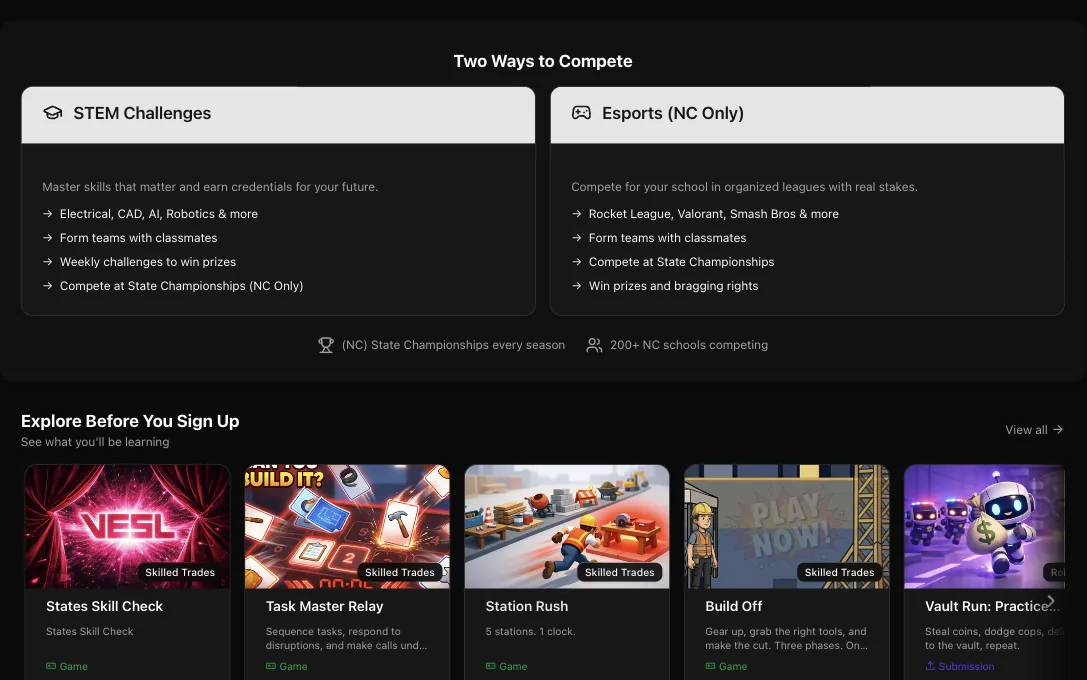
A full-stack Next.js platform with role-based experiences for students, teachers, and staff. Students engage through pathways, games, and competitions; staff get admin tooling, content management, verification, messaging, and analytics in one place.
Inside the product
What's inside
- Student profiles, teams, rosters, and leaderboards
- Mastery pathways, submissions, rubrics, and micro-credentials
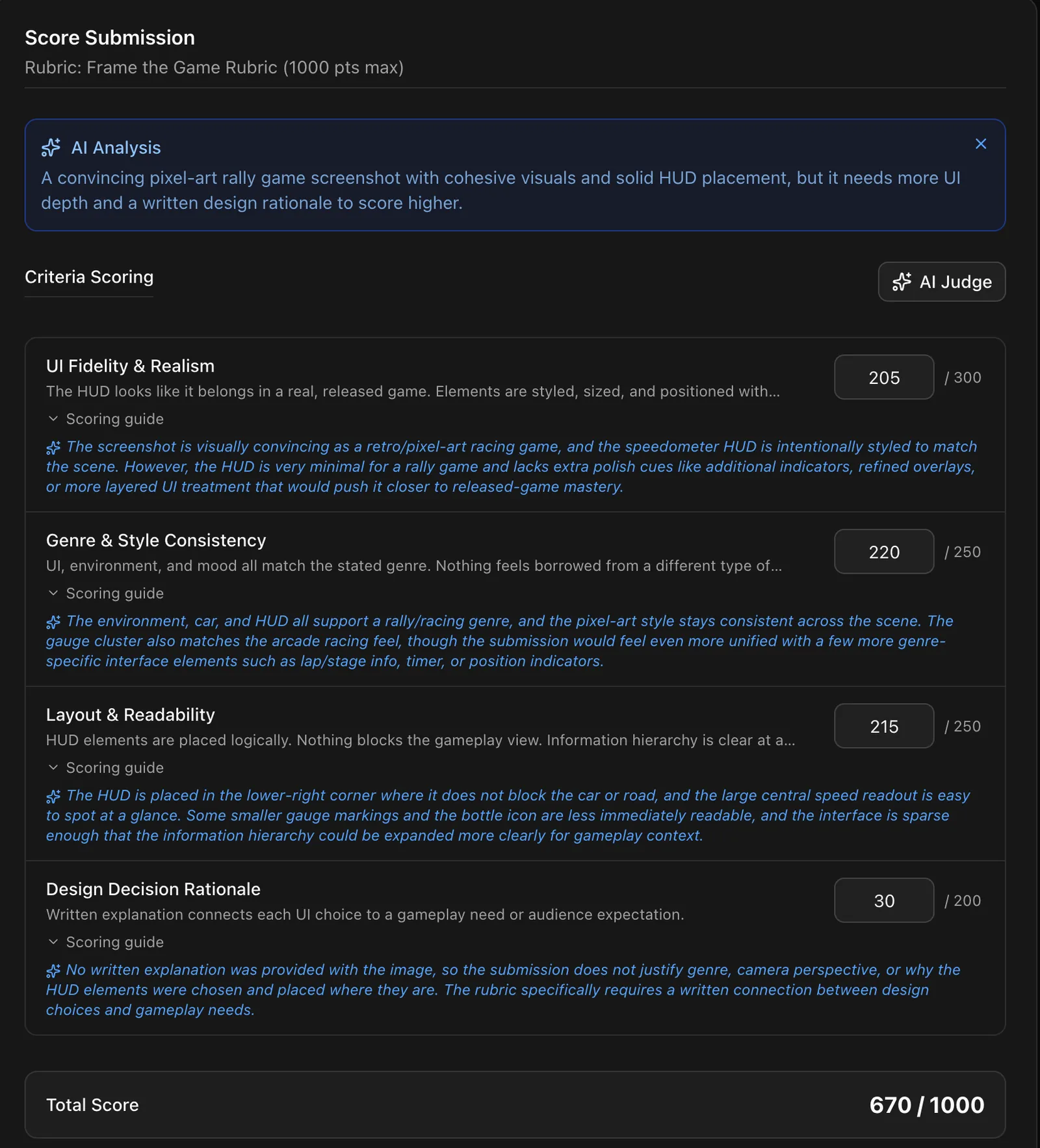
- AI-assisted rubric grading
- Game-based learning catalog (STEM, skilled trades, and more)
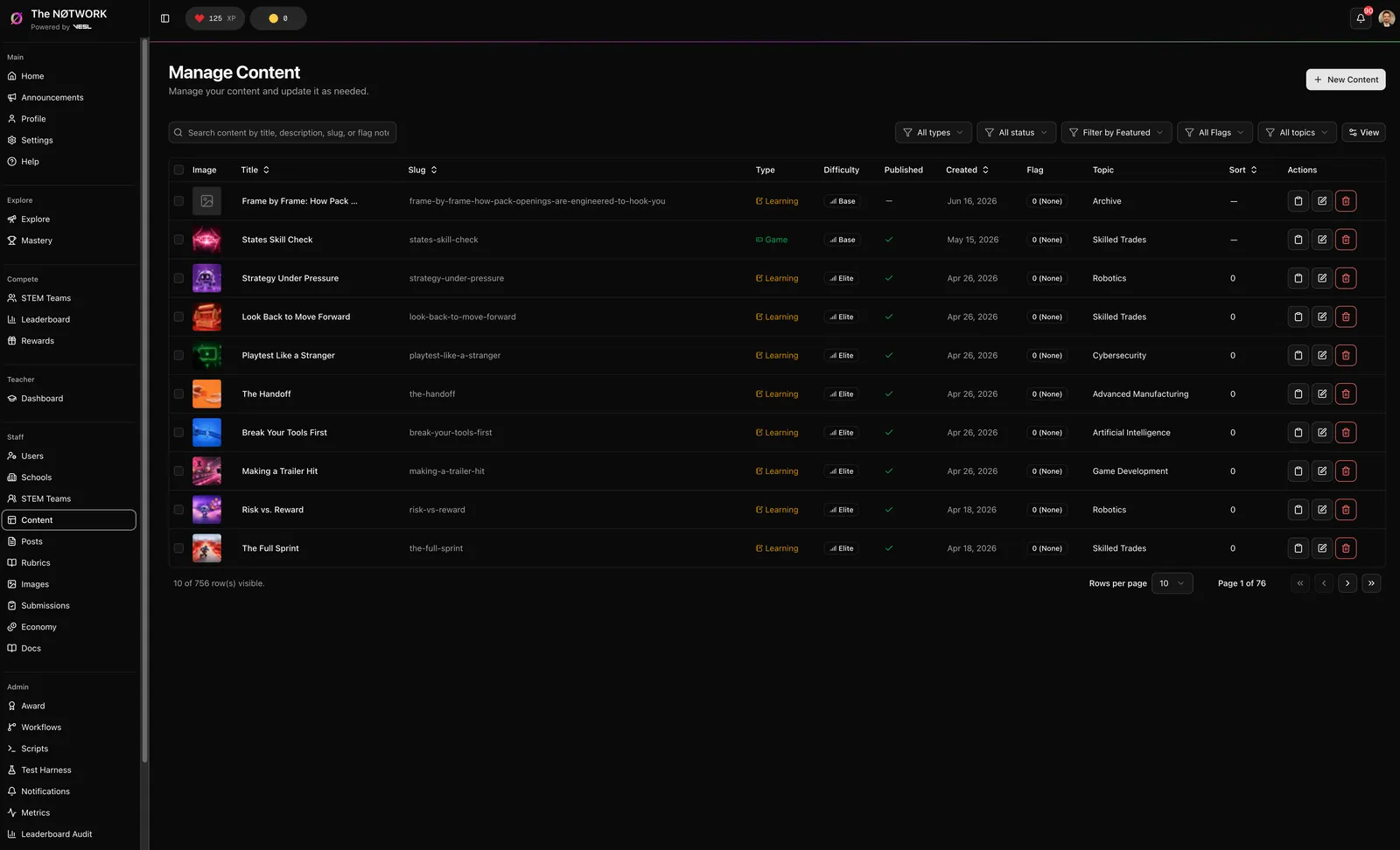
- Curriculum, content, and post management
- Teacher verification and student communication workflows
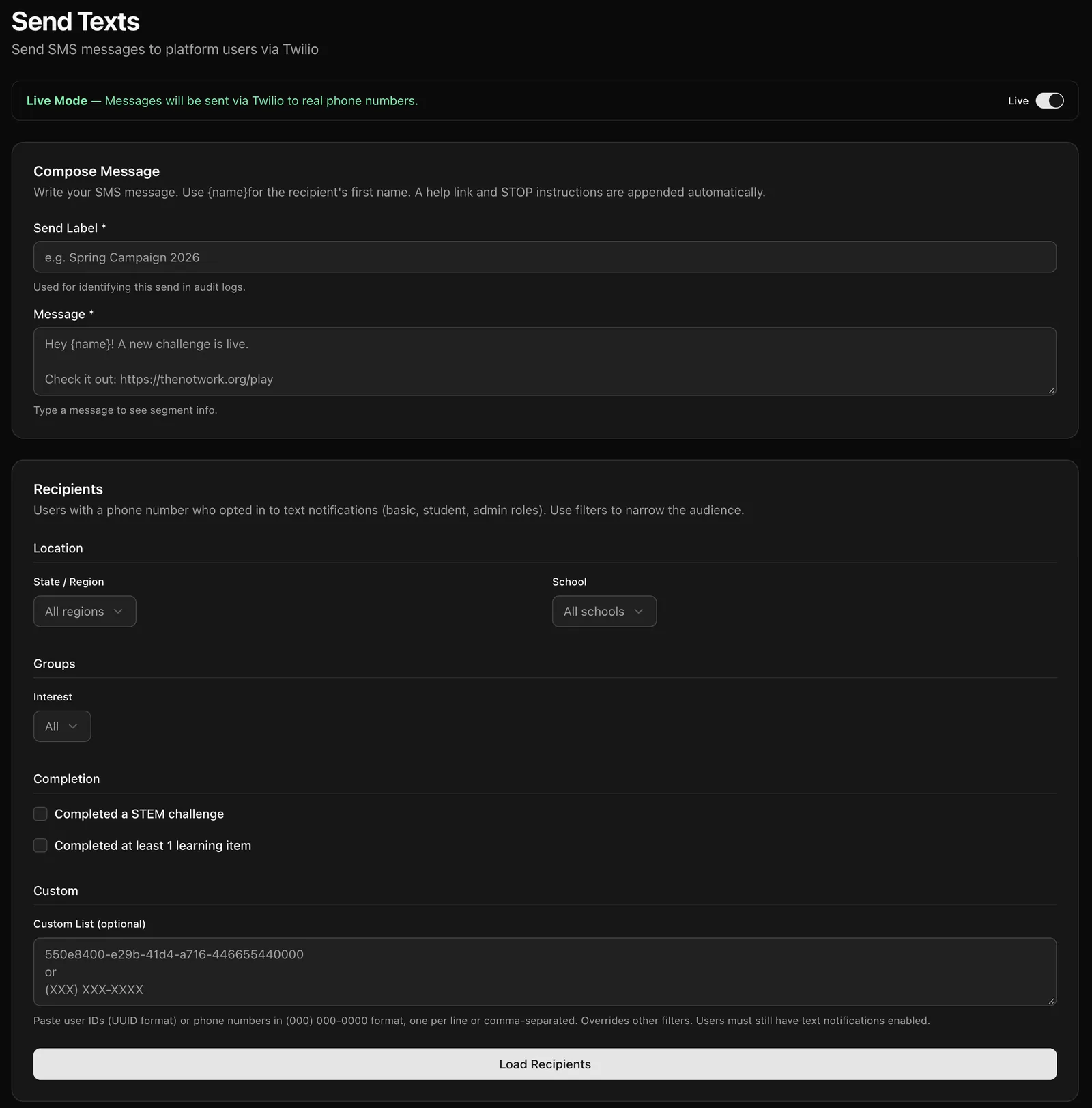
- Notifications, email, and SMS via integrated providers
- Season logic: roster locking, playoff cutoffs, in-season state
- Staff tools: a 750+ item content library, rubrics, AI-assisted judging, SMS campaigns through Twilio, workflows, scripts, a test harness, and metrics
The impact
Replaced spreadsheets and ad-hoc tools with one production system that runs the league day to day: ~24K users, ~490K page views, and a peak of ~1K daily active users.
What stood out
- One of two architects who set the platform's direction. Led five developers through the initial build: hired the team, set coding standards and tooling, reviewed PRs weekly, and refined tickets with product and design.
- Led the 2025 rebuild on a new architecture: schema redesign, end-to-end notifications, server pagination, error handling and logging, and hundreds of regression tests.
- Designed identity verification for in-person competition: a teacher-as-verifier workflow, roster and eligibility logic, and team locking at playoff cutoffs, replacing manual spreadsheet checks.
- AI-assisted judging: the model scores a submission against each rubric criterion with written reasoning and drafts feedback, and staff review and adjust it before saving.
- Built mastery pathways with submissions, rubrics, AI-assisted grading, and micro-credentials, plus an Explore feed that mixes lessons, video, games, and submissions.